Portfolio
Selected software, AI, computer vision, product, and immersive technology projects with implementation details and lessons learned.
Data Scientist
Airbus
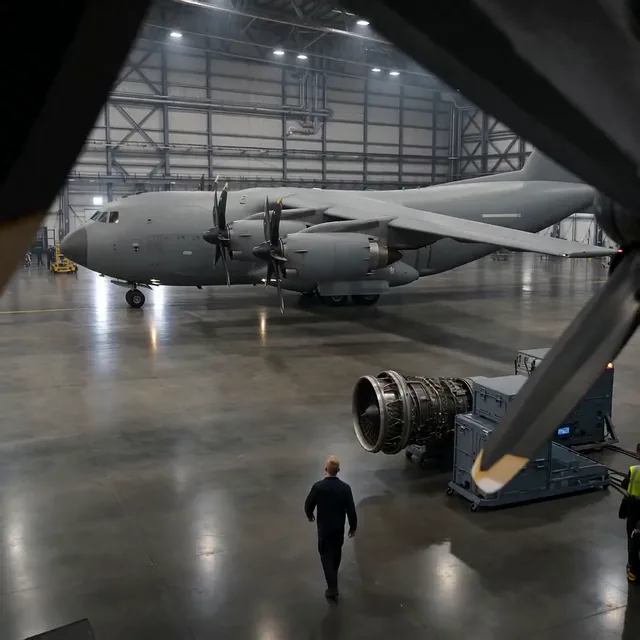
At Airbus Defence and Space, I worked on predictive maintenance for aircraft engines. We used large volumes of operational time-series data to investigate whether developing issues could be identified early enough to support maintenance decisions.
The challenge was working responsibly with noisy, high-dimensional data in a Kubernetes-based big-data environment. I developed PySpark processing and forecasting approaches, then used Spotfire and Streamlit to make intermediate results understandable to domain experts rather than hiding them inside notebooks.
The work deepened my respect for domain knowledge and careful validation. In high-consequence settings, a sophisticated model is not automatically a useful one; assumptions, uncertainty, and limitations need to be visible to the people making decisions.
Data Scientist
Airbus
At Airbus Defence and Space, I worked on predictive maintenance for aircraft engines. We used large volumes of operational time-series data to investigate whether developing issues could be identified early enough to support maintenance decisions.
The challenge was working responsibly with noisy, high-dimensional data in a Kubernetes-based big-data environment. I developed PySpark processing and forecasting approaches, then used Spotfire and Streamlit to make intermediate results understandable to domain experts rather than hiding them inside notebooks.
The work deepened my respect for domain knowledge and careful validation. In high-consequence settings, a sophisticated model is not automatically a useful one; assumptions, uncertainty, and limitations need to be visible to the people making decisions.
Product Manager
Eventim
At Eventim, I worked as product manager for a web-based analytics platform used across more than 20 international markets. The product had to turn shared data and reporting capabilities into something useful for teams with different processes, priorities, and levels of maturity.
The central challenge was alignment rather than a single technical problem. Local requests were often valid, but implementing each one independently would have fragmented the platform. I coordinated stakeholders, clarified the underlying needs, and helped shape a longer-term product direction that could serve the broader organization.
This work sharpened my ability to move between users, business goals, and engineering constraints. It taught me to treat prioritization as a technical responsibility too: every feature carries operational cost, and saying no clearly can be as valuable as shipping.
Product Manager
Eventim
At Eventim, I worked as product manager for a web-based analytics platform used across more than 20 international markets. The product had to turn shared data and reporting capabilities into something useful for teams with different processes, priorities, and levels of maturity.
The central challenge was alignment rather than a single technical problem. Local requests were often valid, but implementing each one independently would have fragmented the platform. I coordinated stakeholders, clarified the underlying needs, and helped shape a longer-term product direction that could serve the broader organization.
This work sharpened my ability to move between users, business goals, and engineering constraints. It taught me to treat prioritization as a technical responsibility too: every feature carries operational cost, and saying no clearly can be as valuable as shipping.

Computer Vision Engineer
FRoSTA
For FRoSTA, I worked on an edge-based computer-vision system for automated quality control in frozen-food production. The goal was to bring visual inspection closer to the production line instead of treating the model as an isolated experiment.
The work covered deep-learning model development as well as camera and hardware integration. The difficult part was making all of these pieces operate as one system under real production constraints, where reliable data capture and deployment matter as much as model accuracy.
This project reinforced that computer vision is a systems discipline. A strong model has little value if the surrounding hardware, inference pipeline, and operational workflow are not designed together.
Computer Vision Engineer
FRoSTA
For FRoSTA, I worked on an edge-based computer-vision system for automated quality control in frozen-food production. The goal was to bring visual inspection closer to the production line instead of treating the model as an isolated experiment.
The work covered deep-learning model development as well as camera and hardware integration. The difficult part was making all of these pieces operate as one system under real production constraints, where reliable data capture and deployment matter as much as model accuracy.
This project reinforced that computer vision is a systems discipline. A strong model has little value if the surrounding hardware, inference pipeline, and operational workflow are not designed together.
Solo founder & builder
Zeitclaim
I originally built zeitclaim.com for myself. During my time as a senior consultant at Machine Learning Reply, I experienced how tedious it was to reconstruct and record the time spent across client projects at the end of each day.
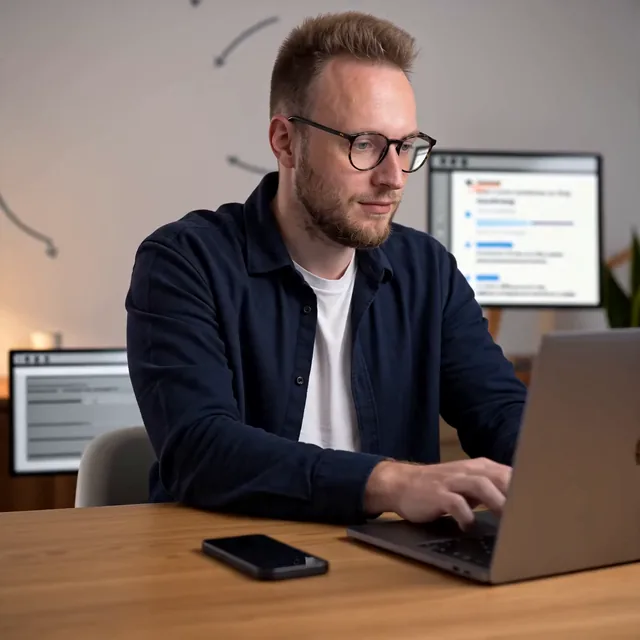
I was convinced that AI could make this routine significantly easier. Instead of maintaining timers and forms, I describe my day by voice or text and Zeitclaim turns it into structured hours, projects, and categories. I use it every day, which keeps the product grounded in a problem I understand firsthand.
Building the complete product pushed me far beyond engineering. Subscriptions, observability, onboarding, support, SEO, and paid acquisition all became part of the work. The clearest lesson so far is also the least technical one: building a SaaS product is difficult, but getting people to discover, trust, and pay for it is considerably harder.
Solo founder & builder
Zeitclaim
I originally built zeitclaim.com for myself. During my time as a senior consultant at Machine Learning Reply, I experienced how tedious it was to reconstruct and record the time spent across client projects at the end of each day.
I was convinced that AI could make this routine significantly easier. Instead of maintaining timers and forms, I describe my day by voice or text and Zeitclaim turns it into structured hours, projects, and categories. I use it every day, which keeps the product grounded in a problem I understand firsthand.
Building the complete product pushed me far beyond engineering. Subscriptions, observability, onboarding, support, SEO, and paid acquisition all became part of the work. The clearest lesson so far is also the least technical one: building a SaaS product is difficult, but getting people to discover, trust, and pay for it is considerably harder.
Co-founder & VR developer
Volvo VR
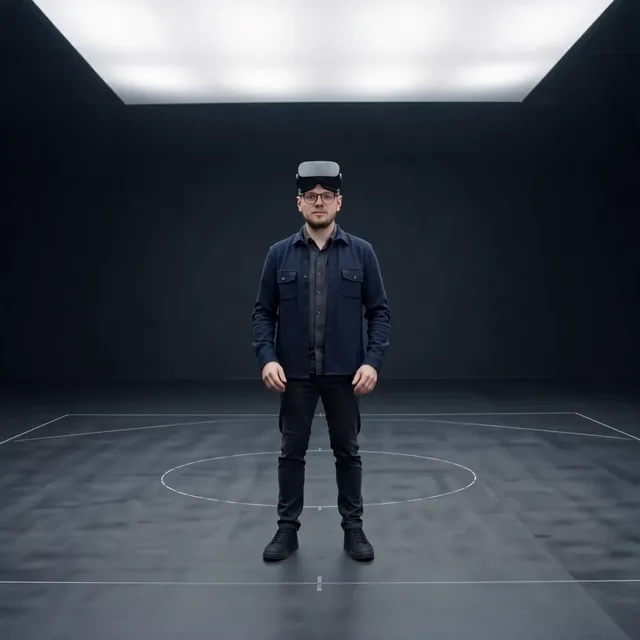
At my VR agency Involvr, our team built immersive XC40 and XC60 experiences for Volvo Germany. The vehicles were recreated in full 3D, inside and out, so customers could explore them across VR and mobile platforms.
I worked across project management, client communication, and technical delivery. Underneath the experience was a custom C++ and OpenGL engine, browser delivery through WebAssembly, and support for platforms ranging from the web to Android, iOS, and Samsung Gear VR.
The project shaped how I still approach product work today. Ambitious technology only succeeds when client expectations, creative direction, platform limits, and delivery deadlines are treated as one problem rather than separate disciplines.
Co-founder & VR developer
Volvo VR
At my VR agency Involvr, our team built immersive XC40 and XC60 experiences for Volvo Germany. The vehicles were recreated in full 3D, inside and out, so customers could explore them across VR and mobile platforms.
I worked across project management, client communication, and technical delivery. Underneath the experience was a custom C++ and OpenGL engine, browser delivery through WebAssembly, and support for platforms ranging from the web to Android, iOS, and Samsung Gear VR.
The project shaped how I still approach product work today. Ambitious technology only succeeds when client expectations, creative direction, platform limits, and delivery deadlines are treated as one problem rather than separate disciplines.
Freelance · Advisory & engineering
Trusted Advisor Group
At trusted-advisor.group, I combine product and engineering advice with hands-on software development. The platform supports wealth-management advisors in capturing, visualizing, and analyzing complex client, wealth, and entrepreneur constellations.
The challenge is translating a relationship-heavy domain into software without reducing everything to a rigid form. Advisor workflows contain nuance, dependencies, and sensitive context. My work is to understand those workflows, help shape the product, and turn them into client-facing tools that remain clear and practical.
This work has reinforced how important domain understanding is. The value does not come from adding technology for its own sake, but from making complex conversations easier to structure, explain, and continue. Working across advisory and implementation also helps me test product decisions against technical reality early.
Freelance · Advisory & engineering
Trusted Advisor Group
At trusted-advisor.group, I combine product and engineering advice with hands-on software development. The platform supports wealth-management advisors in capturing, visualizing, and analyzing complex client, wealth, and entrepreneur constellations.
The challenge is translating a relationship-heavy domain into software without reducing everything to a rigid form. Advisor workflows contain nuance, dependencies, and sensitive context. My work is to understand those workflows, help shape the product, and turn them into client-facing tools that remain clear and practical.
This work has reinforced how important domain understanding is. The value does not come from adding technology for its own sake, but from making complex conversations easier to structure, explain, and continue. Working across advisory and implementation also helps me test product decisions against technical reality early.

AI Engineer
RedBull GenAI
For RedBull, I helped build a web service that applied a Stable Diffusion-based FaceSwap workflow to user-provided images. What looked like a focused generative-AI feature on the surface required a complete service around the model.
GPU workloads are expensive, slow to start, and very different from ordinary web requests. The solution combined AWS infrastructure, containerized inference, GPU orchestration, content moderation, and secure handling of uploads. The model was only one part of making the experience reliable enough for real users.
The project reinforced a pattern I have seen repeatedly in AI work: the impressive demo is usually the easy part. Production quality comes from the less visible decisions around failure modes, safety, latency, infrastructure, and operating cost.
AI Engineer
RedBull GenAI
For RedBull, I helped build a web service that applied a Stable Diffusion-based FaceSwap workflow to user-provided images. What looked like a focused generative-AI feature on the surface required a complete service around the model.
GPU workloads are expensive, slow to start, and very different from ordinary web requests. The solution combined AWS infrastructure, containerized inference, GPU orchestration, content moderation, and secure handling of uploads. The model was only one part of making the experience reliable enough for real users.
The project reinforced a pattern I have seen repeatedly in AI work: the impressive demo is usually the easy part. Production quality comes from the less visible decisions around failure modes, safety, latency, infrastructure, and operating cost.
For the career story behind this work, read the bio.